
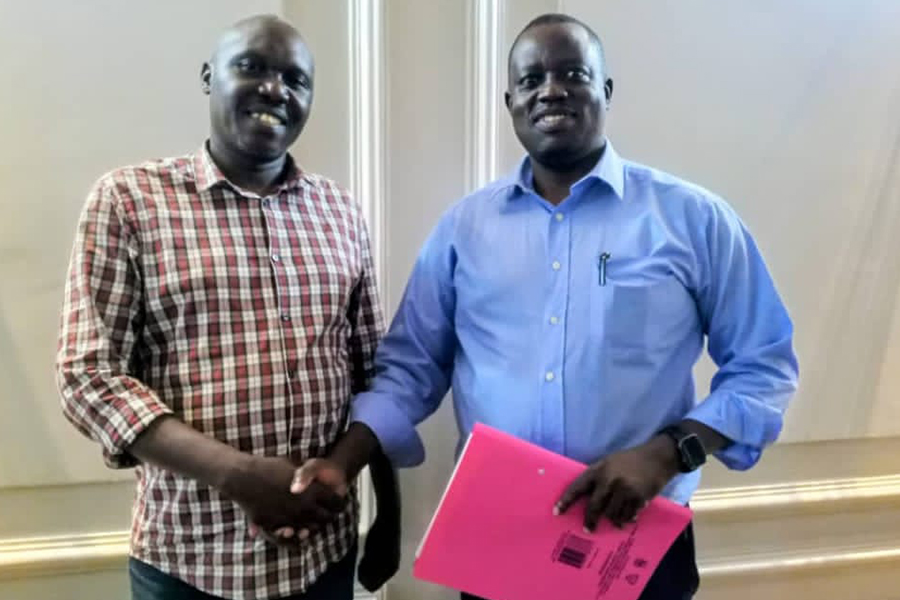
The Uganda Aids Commission (UAC) has entered into a partnership with the Iteso Cultural Union (ICU) to strengthen the fight against HIV/Aids across the Teso sub-region, in line with the national agenda to end Aids by 2030.
The engagement was held at Zuri Luxe Hotel, bringing together cultural leaders, government officials and development partners to discuss strategies for reducing new HIV infections and improving community awareness.
Tom Etii, Director of Partnerships at UAC, emphasized that cultural institutions are vital stakeholders in the national HIV response because of their deep-rooted influence within communities.
“We coordinate the HIV response across the country through a multi-sectoral approach. Cultural institutions like the ICU play a crucial role because they are custodians of values and can reach people directly at the grassroots,” Etii said.
He noted that the ICU’s structured community network stretching from villages and sub-counties to districts provides an effective platform for disseminating HIV prevention messages.
“Through these structures, we can engage communities on key prevention methods such as abstinence, faithfulness among married couples, and consistent condom use,” he added.
Etii revealed that the highest HIV infection rates are currently observed among adolescents and young adults aged 15–24 years.
He urged young people to remain vigilant, avoid risky behaviours and take advantage of HIV testing and counselling services.
He also appealed to women, especially expectant mothers, to attend antenatal care regularly and adhere to HIV testing and treatment to prevent mother-to-child transmission.
“When mothers take their drugs and attend antenatal clinics, they can give birth to HIV-free babies,” he said.
According to UAC statistics, Uganda has made significant progress in reducing new HIV infections and related deaths over the past decade.
“About ten years ago, we registered nearly 97,000 new infections annually, but this has dropped to around 37,000. HIV-related deaths have also declined from over 100,000 to 20,000 per year,” Etii said.
He attributed the progress to strong partnerships involving Parliament, the Ministry of Gender, Labour and Social Development, the Ministry of Education and Sports, local governments, media and the private sector, all working together under UAC’s 14th Partnership Mechanism.
“We’re ensuring that messages about prevention, testing and treatment reach all Ugandans, including youth, people with disabilities and those in rural communities,” he said.
Etii urged the public to end stigma and discrimination against people living with HIV, emphasizing that adherence to treatment suppresses the virus and prevents transmission.
On his part, Andrew Ocole, Prime Minister (Ekirigi) of the Iteso Cultural Union, welcomed the partnership, saying it aligns with the institution’s mission of promoting community well-being and moral values.
“We appreciate UAC for making us a key player in the fight against HIV/AIDS. The disease still exists, and many people have become complacent. Together, we will create awareness in schools, churches, mosques and villages,” Ocole said.
He linked rising infections among youth to drug abuse and what he described as moral decline, calling for renewed discipline and cultural guidance to keep young people focused.
“Drug abuse leads to reckless behaviour and unsafe sex. We shall continue sensitising the public on responsible living and the importance of regular medical check-ups,” he said.
Ocole further advised families to hold household discussions with their children about sexual health, responsible behaviour and the dangers of peer influence.
“Parents must teach their children abstinence, respect for cultural values and how to avoid risky practices like sharing sharp objects,” he added.
Both leaders reaffirmed their commitment to the UNAIDS global target of ending AIDS as a public health threat by 2030.
Etii concluded by urging all Ugandans to test regularly, take medication consistently if positive and remain proactive in protecting themselves and their partners.
“HIV is still with us, it kills, but together, through awareness, responsibility and solidarity, we can achieve an Aids-free generation,” he said.
